
7 Native Pollinator Perennials for your Garden, July Garden Tour and Feature Plant: Japanese Red Pine 'Low Glow'
Welcome to Northeastern Gardening News!

Welcome to Northeastern Gardening News. Join me monthly for articles all to do with gardening! Gardening since the age of five and designing gardens for over 30 years, I share my knowledge, passion and experiences with others. Please visit as often as you like, share this newsletter with friends, and I hope you enjoy your time here! If you find the information to be useful, please consider pledging a donation to support and allow me to continue my work.
7 Native Pollinator Perennials for Your Garden
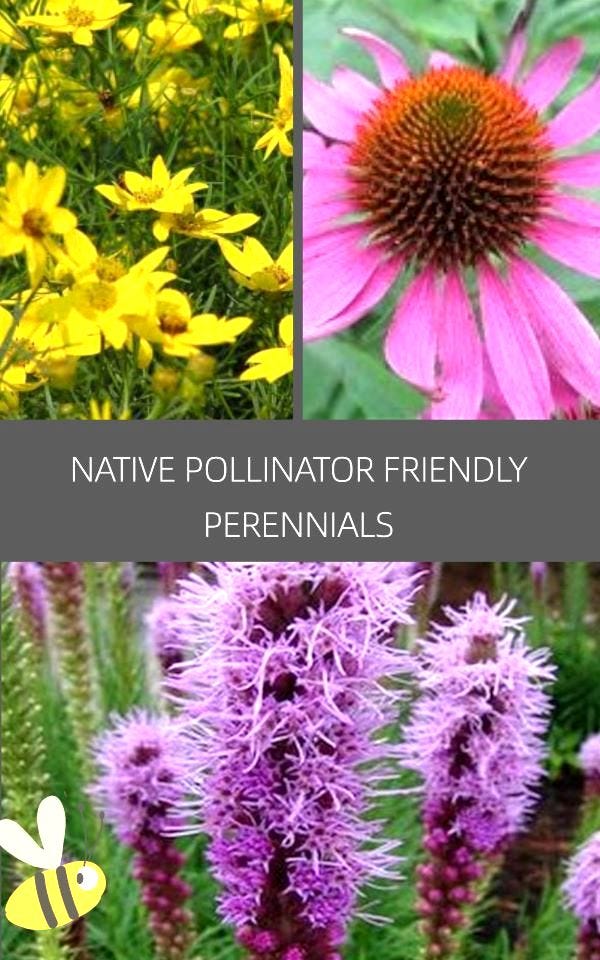
With the decline of natural pollinators, interest in native and pollinator-friendly gardening has increased substantially, and for a good reason. If you are looking to create a beautiful garden that supports bees, butterflies, and other beneficial pollinators, planting native perennials is one of the best investments you can make. Native plants have evolved alongside local wildlife, making them excellent sources of nectar, pollen, and habitat while requiring less maintenance than many non-native ornamentals. In addition to native Milkweed, which is an essential host plant for Monarch butterfly caterpillars, here are seven additional native pollinator plants for the northeast.
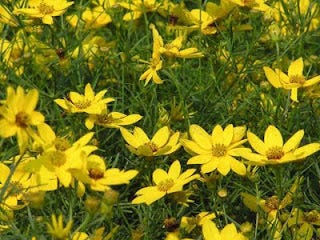
Coreopsis (Tickseed): Coreopsis is one of the longest-blooming native perennials, producing cheerful yellow flowers from early summer into fall. Its bright blooms attract native bees, butterflies, and beneficial insects throughout the growing season.
● Full sun
● Well-drained soil
● Drought tolerant once established
● Deadheading spent flowers can encourage further blooming
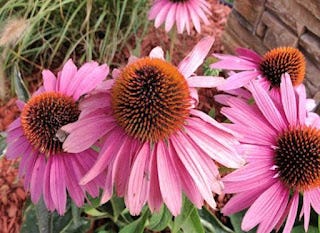
Purple Coneflower (Echinacea purpurea): A true garden favorite, purple coneflower is as tough as it is beautiful. Its large purple blooms are magnets for butterflies and native bees, while its seed heads become an important winter food source for goldfinches and other birds.
● Full sun
● Average, well-drained soil
● Highly drought tolerant
●Leave seed heads through winter for wildlife
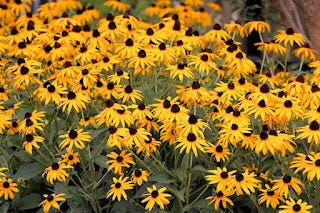
Black-Eyed Susan (Rudbeckia hirta): Black-eyed Susan are iconic native wildflowers known for their golden petals surrounding dark centers. They bloom heavily throughout summer, attracting bees, butterflies, and beneficial insects while adding color to the landscape.
● Full sun
● Adaptable to most soil types
● Drought tolerant
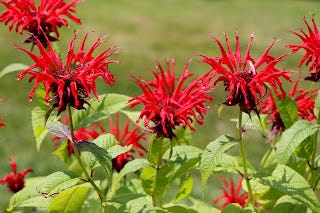
Bee Balm (Monarda): Bee balm, also known as wild bergamot, is a standout native perennial with vibrant blooms in shades of red, pink, purple, or white. Its nectar-rich flowers are especially attractive to bees, butterflies, and hummingbirds, and its aromatic foliage adds another layer of garden appeal.
● Full sun to partial shade
● Moist, well-drained soil
●Divide clumps every few years to keep plants vigorous.
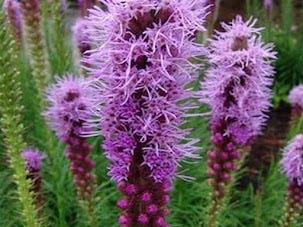
Blazing Star (Liatris spicata): With its tall spikes of fluffy purple flowers, blazing star adds dramatic vertical interest while serving as one of the best nectar plants for butterflies, native bees, hummingbirds, and even hummingbird moths.
● Full sun
● Well-drained soil
● Moderate drought tolerance
● Plant in groups for the visual impact
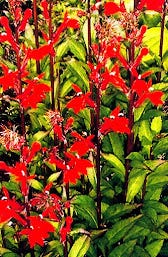
Cardinal Flower (Lobelia cardinalis): Cardinal flower is a stunning native perennial with brilliant red blooms that are especially attractive to hummingbirds, butterflies, and native bees. Its tall flower spikes add bold color to garden spaces from midsummer into early fall and it is perfect for shadier, moist spots.
Growing Tips:
● Partial shade
● Moist, rich soil
● Keep soil consistently damp
● Great for rain gardens, pond edges, and woodland borders
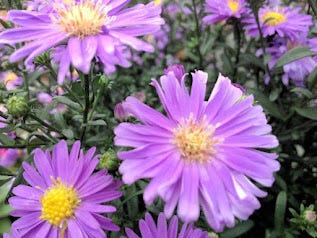
New England Aster (Symphyotrichum novae-angliae): When most summer flowers begin to fade, New England aster steals the show. Its vibrant purple flowers bloom from late summer into fall, providing critical nectar for migrating monarch butterflies and late-season pollinators.
● Full sun
● Moist, well-drained soil
● Pinch stems in early summer for bushier growth
● Excellent for naturalized landscapes
By incorporating these native plants into your landscape, you can enjoy months of colorful blooms while creating a valuable habitat for pollinators. Together, Coreopsis, Echinacea, Black Eyed Susan, Bee Balm, Liatris, Cardinal Flower and New England Aster provide nectar and pollen from early summer through fall, helping sustain bees, butterflies, hummingbirds, and other beneficial wildlife.
Whether you are planting a dedicated pollinator garden or simply adding a few native perennials to existing beds, every flower makes a difference. Your garden won’t just look beautiful, it will become part of a healthier, more resilient ecosystem.
Author: Lee Miller © Copyright 2026. All rights reserved.
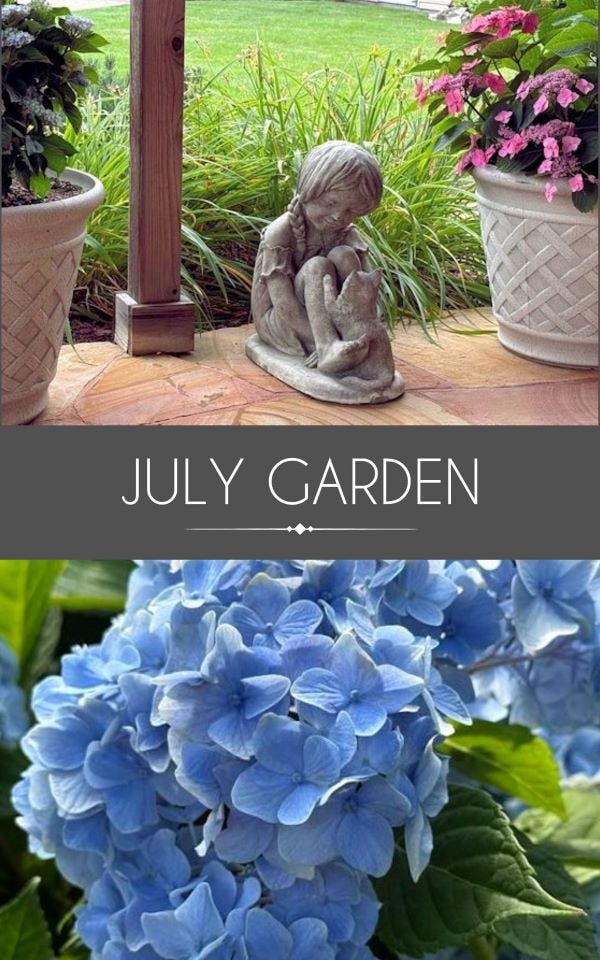
July Garden Tour: Summer Blooms Make me Feel Fine!
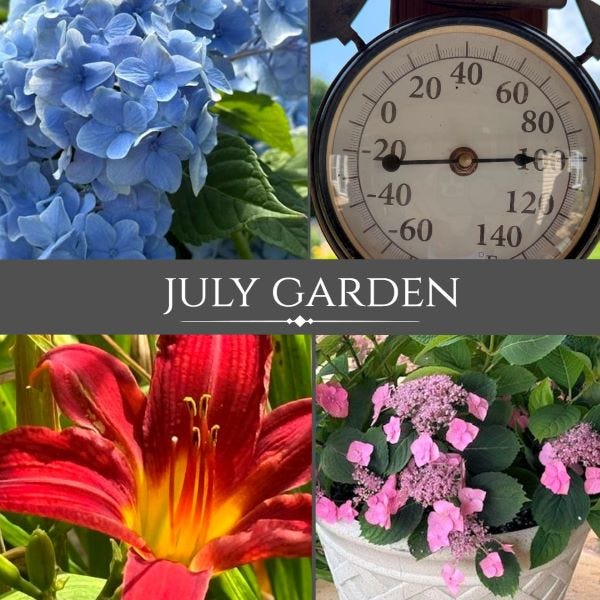
Welcome to my zone 7b Long Island garden! With a record breaking heat of 97 degrees on the 3rd, (which felt like 102) followed by torrential rains on the 6th and 18th, believe it or not, we are still in a drought. On the hotter days as I sit under my the covered porch and as the lyrics to the song “Summer Breeze” go over and over again in my mind, I gaze out into the garden and daydream. On the cooler days, it is time to work in the garden deadheading perennials and performing some needed pruning. Whatever the temperature outside, the garden is always my happy place. Join me for a tour!
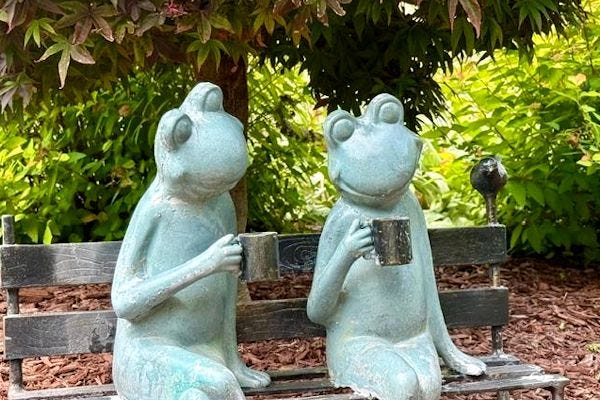
As we start the tour, here is a view of the patio garden. Trombly’s Red Sentinel Japanese Maple stands as a focal point, surrounded by Spirea ‘Candy Corn’, Echinacea, Lamb’s Ear, lilies and juniper. The welcoming committee is here to greet you along with a beverage of choice!
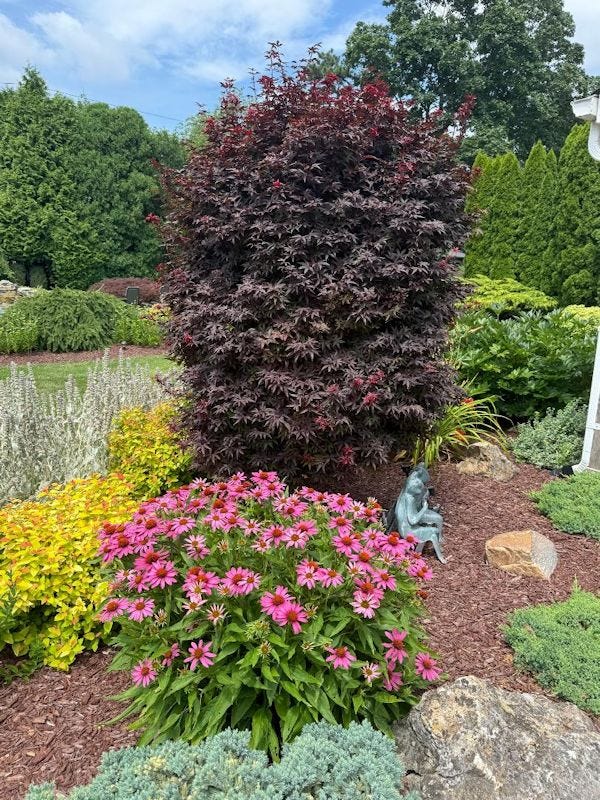
This is the view I see from the patio, where I sit and contemplate what is going to be the next chore to do in the garden, go over in my mind the course of the day, or to take a break after doing some maintenance. In view are the blooms of Echinacea Pow Wow ‘Wild Berry’, along with a closer view of Spirea ‘Candy Corn’, Juniper and mixed perennials.
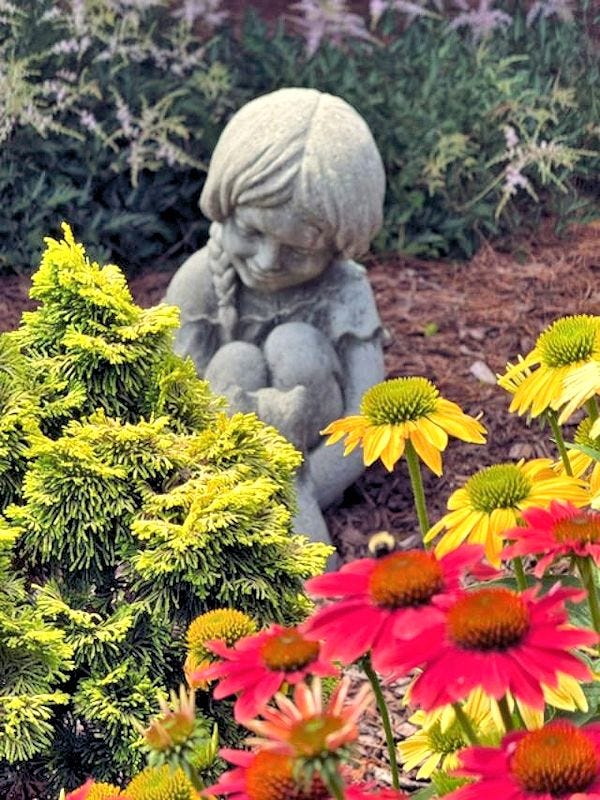
Along the pool border is my favorite statue of a young girl with her kitty, along with Echinacea ‘Cheyenne Spirit’ and Golden Dwarf Hinoki Cypress. Astilbe ‘Sprite’ can be seen displaying its unusual feathery, star-like blooms in the backdrop.
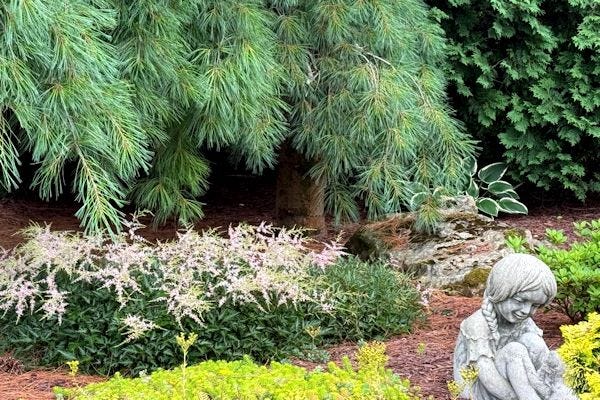
Here is a closer view of Astilbe ‘Sprite’. This dwarf variety displays light pink wispy blooms beneath the cascading foliage of Weeping White Pine along the pool border. Groundcover sedum is going into bloom along the sunnier portion of the bed.
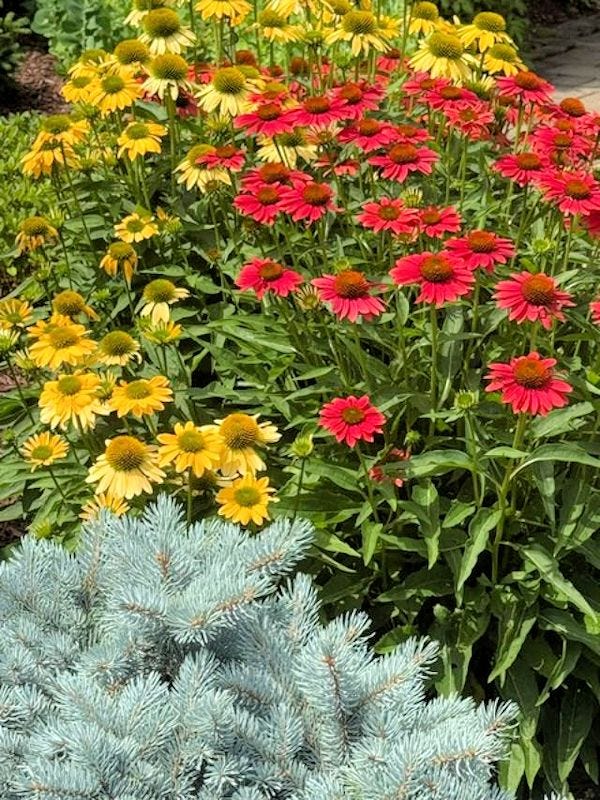
Here is the Echinacea ‘Cheyenne Spirit’ with its multitude of different color blooms on the same plant, along with Dwarf Blue Globe Spruce.
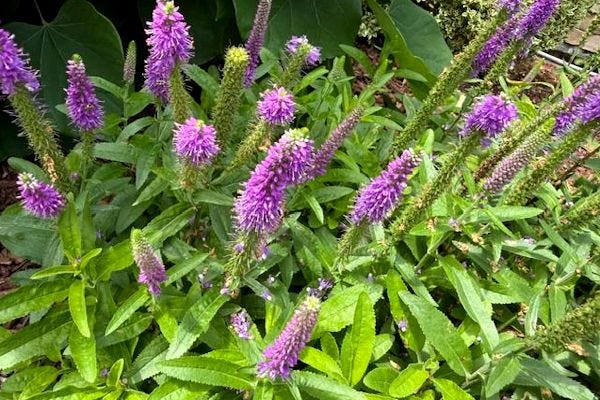
Veronica ‘Royal Candles’ displays its long lasting spikes of colorful blooms along the walkway, while Hydrangea ‘Nikko Blue’ shows its attractive blue blooms each summer.
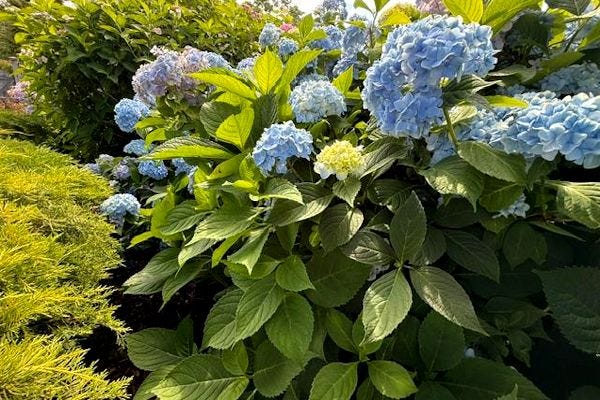
‘Nikko Blue’ is a reliable old fashioned hydrangea that blooms on old wood. Pruning Tip: To ensure blooms each summer, only prune off only the dead flower heads just above the next node in late winter or early spring. We have had some cold Spring temperatures where the buds can be affected, but luckily the plant is sheltered where it is.
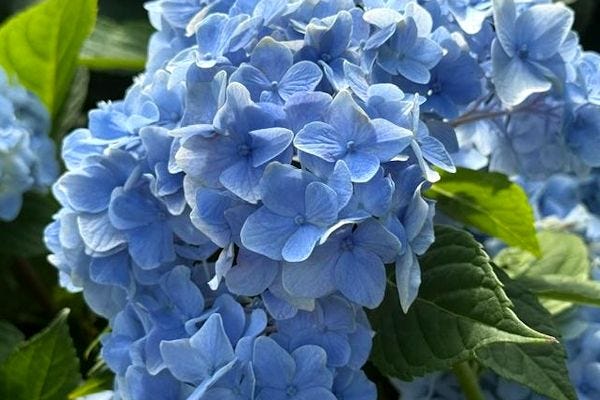
Here are the blooms up close. I so look forward to enjoying them each year.
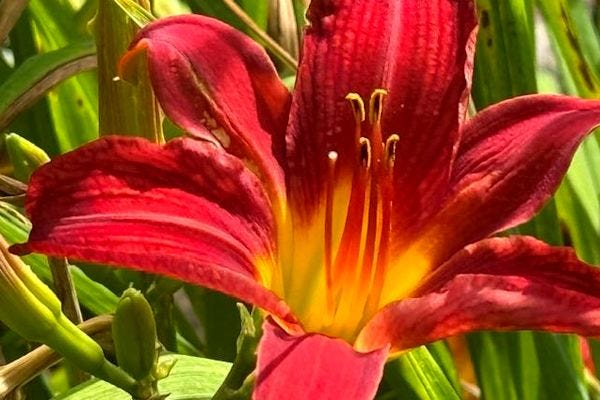
Now that the month of July has set in, and the Stella D Oro Daylilies have been blooming for some time, the next round of blooms are here from Daylily ‘Sammy Russell’. The orangey-red blooms with yellow centers last for quite some time and brighten up the garden.
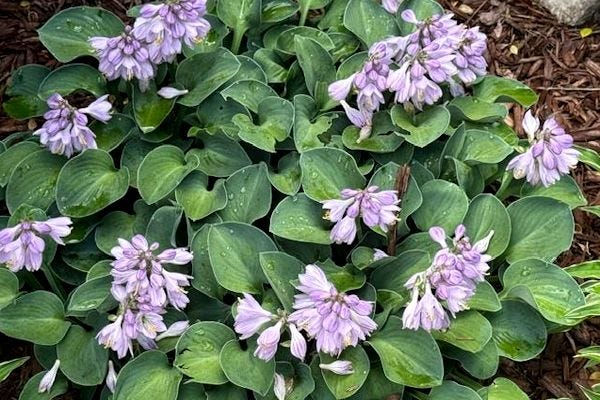
The blooms of Hosta also take notice starting in July, and the tubular flowers are an attraction for hummingbirds. Here are some of the first blooms from a miniature variety called Hosta ‘Mouse Ears’, which resides along the pool border.
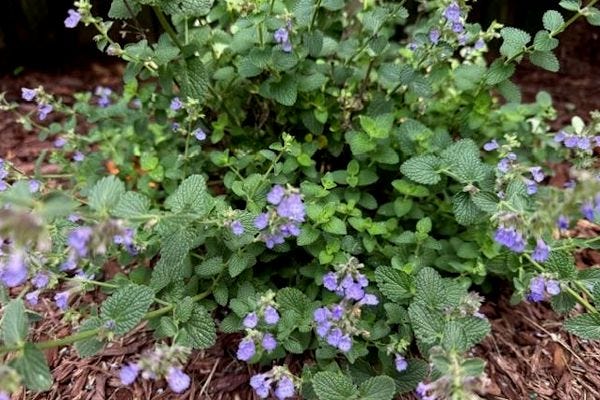
There are many new varieties of Nepeta (Catmint). This one is Nepeta ‘Cat’s Pajamas’, which stays smaller and more compact and displays deeper bluish-purple blooms. It also blooms throughout most of the summer and attracts pollinators too!
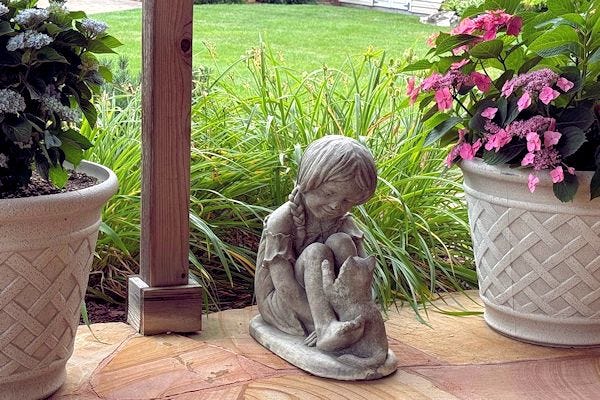
Along the patio, I am enjoying my new matching planters with different varieties of dwarf hydrangea, which are in full bloom right now. Here is Hydrangea ‘Magical Revolution’ on the left and Tuff Stuff ‘Top Fun’ on the right!
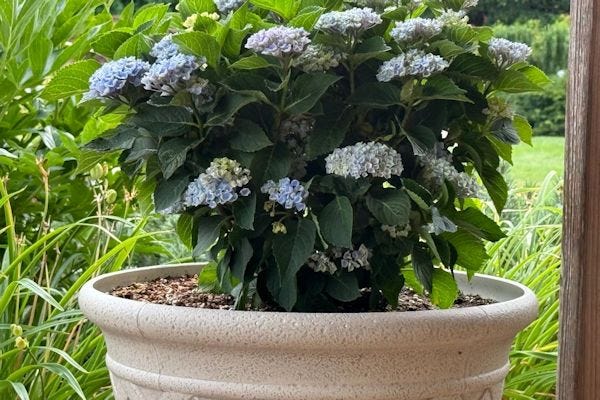
Hydrangea ‘Magical Revolution’ is hardy to USDA zones 5-9, and is admired for its long lasting blooms on both new and old wood, and it is a compact plant, growing to just one to two feet tall by wide. It is known to bloom up to five months and produces tones of pink or blue blooms (depending on soil pH) which deepen in color to purple, maroon and green as they age. I just got this beauty, so I am looking forward to enjoying the show!
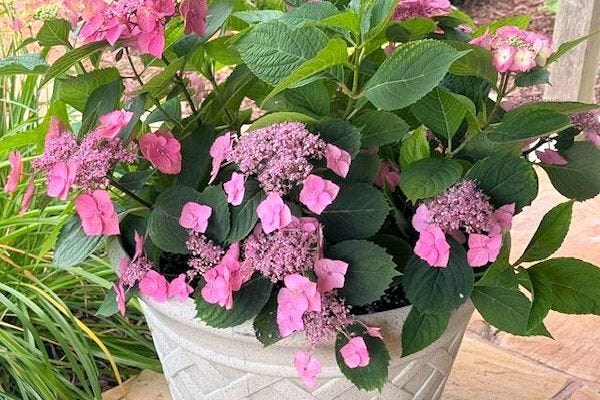
Hydrangea Tuff Stuff ‘Top Fun’ is a re-blooming mountain hydrangea with lace-cap blooms that form on both old and new wood. It is hardy in USDA zones 4-9, and grows to a height and width of two to three feet. I have been enjoying this beauty for three years now. Colors can range form pink to blue depending on soil acidity.
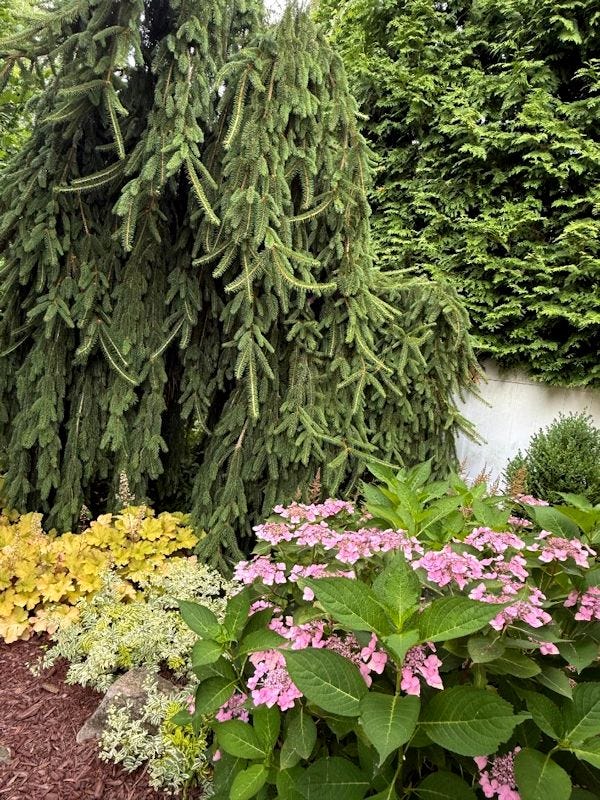
Here in the back shade garden is a mature Weeping Norway Spruce with Upright Boxwood, Astilbe, Coral Bells ‘Caramel’, Jacob’s Ladder and another mountain hydrangea.
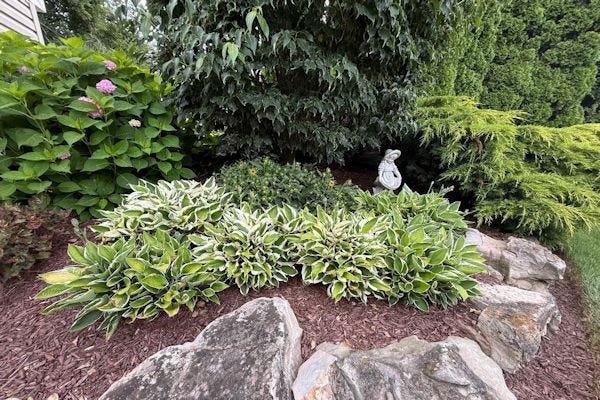
Strolling around to the northern border, here is Kousa Dogwood ‘Greensleeves’, Endless Summer Hydrangea to the left, Black Eyed Susan, Hosta ‘Patriot’ and Gold Lace Juniper to the right.
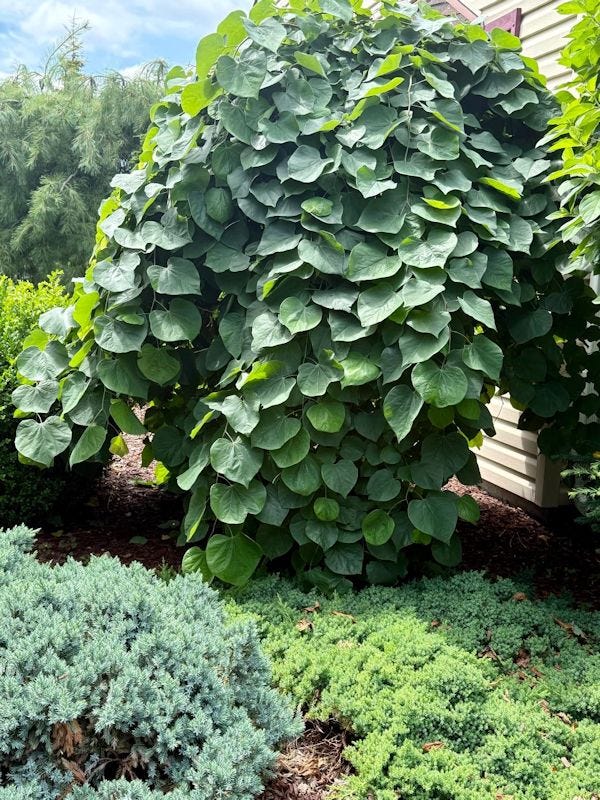
We could not end the tour without visiting the Weeping Eastern Redbud ‘Lavender Twist’ along the front walkway. Even though it blooms in spring, I admire the foliage even more. It’s large heart-shaped leaves seem to get bigger every year!
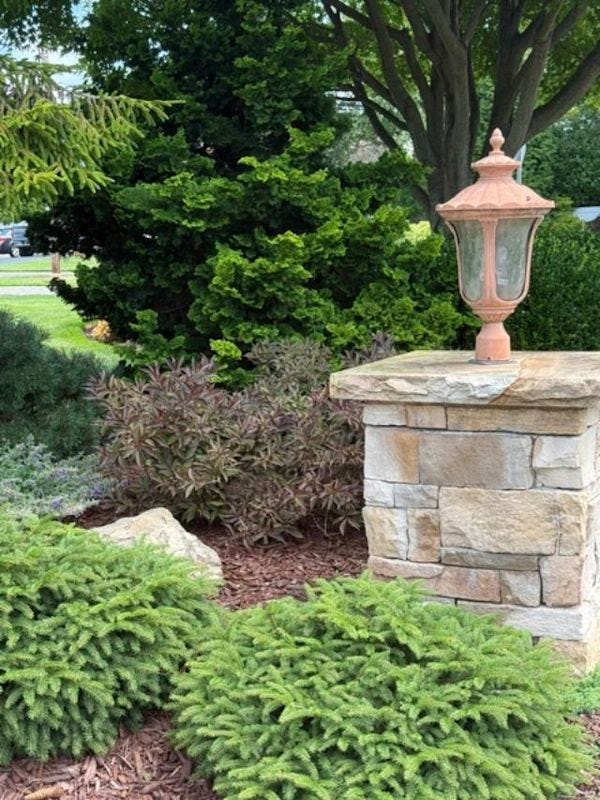
Last, but not least is a visit to the driveway planting for some different forms of foliage and blooms too. In the backdrop is Golden Hinoki Cypress ‘Verdoni’ with the deep purple foliage of ‘Spilled Wine’ Weigela, deep green foliage of Mugo Pine, light green foliage of Dwarf Norway Spruce and blooms of Nepeta ‘Walkers Low’. That is it for now, and it looks like we may be headed into yet another heat wave! I guess I will be playing “Summer Breeze” in my mind once again!
Author: Lee Miller © Copyright 2026. All rights reserved.

Connect With Me 🌼
It’s time to plan your garden! Visit my Author Page 👈to learn about and purchase my books, each one focusing on different aspects of gardening, including landscape ideas, design principles, gardening by month for all-season interest, gardening tips and maintenance, shade gardening, gardening inspiration and more. And also be sure to check out my newest publication, The Houseplant Guide, to guide you on your houseplant journey! If you have read any of my books and have found them to be useful, reviews are very much appreciated!
Find me on Instagram at Northeastern Gardening and Facebook at A Guide to Northeastern Gardening Blog & Author Page.
Feature Plant: Japanese Red Pine ‘Low Glow’-A Compact Evergreen for Year-Round Appeal
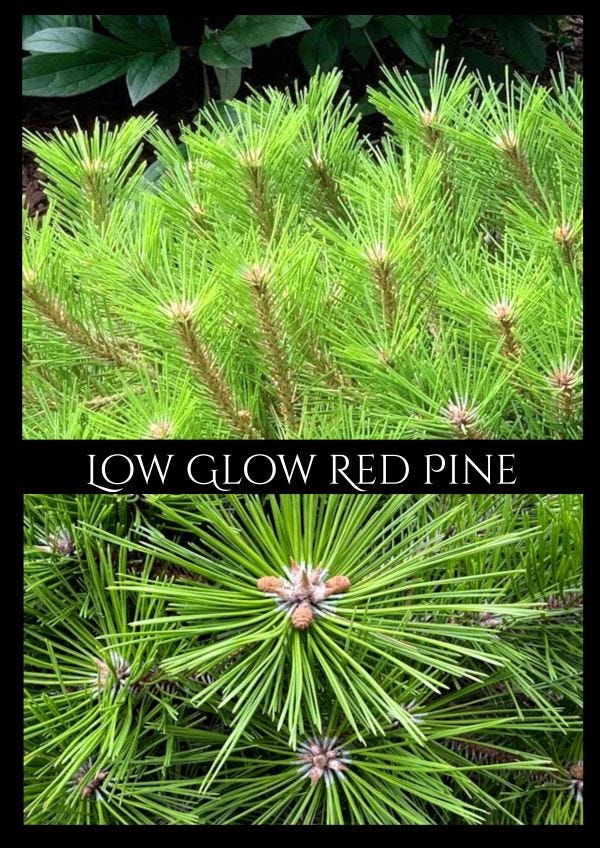
Today we feature a slow growing evergreen with an abundance of landscape appeal. If you’re looking for a compact, low-maintenance evergreen that adds year-round structure and rich green texture to the landscape, here is the plant for you!
To support my work and get the full experience, upgrade to being a paying subscriber to Northeastern Gardening News.